Wedding meal choices and allergies: a list for your caterer
Updated:
Ask for meal choices and allergies together with the RSVP, as specifically as possible, and give the caterer a list with totals overall and per table one to three weeks before. That’s all it takes: who eats what, who has to be careful and where those guests sit. Then there’s no guesswork at the table on the night.
What to ask
- Entrée choice, if there’s a plated dinner with options, such as beef, fish or vegetarian. Describe each dish briefly so guests know what they’re choosing.
- Diet, such as vegetarian or vegan, even for a buffet.
- Allergies and intolerances, as specific as possible: “peanuts” or “gluten” helps the kitchen more than “allergy”.
- Kids’ meals, counted separately from adults.
- Plus-ones: The plus-one needs a meal choice too. It’s easy to forget.
Only ask for what the kitchen really needs. For a buffet, diet and allergies are usually enough.
How to word the question
A line that works well on an RSVP card or form: “Anything you can’t eat? Please be specific, for example peanuts, gluten or dairy.” Keep allergies separate from preferences. “Doesn’t like mushrooms” is a wish; a nut allergy is a safety issue. The kitchen may know both, but it has to be able to tell them apart.
For reference: the FDA lists nine major food allergens in the US: milk, eggs, fish, crustacean shellfish, tree nuts, peanuts, wheat, soybeans and sesame. It helps when guests name their allergy in exactly these terms.
Ask with the RSVP
The easiest way is to ask for the meal choice on the RSVP card or form. If you collect replies in a spreadsheet, add columns for “Meal” and “Note”; when you paste the list, the planner also recognizes columns like “Allergies” or “Dietary”. Then you bring everything into the planner in one step, as the help article on importing your guest list explains.
With RSVPs by link (Event Pass), guests pick their meal and mention allergies right in their reply. You set up to eight meal options, and plus-ones can choose their own meal. Guests only send allergy details after confirming they go to you. Tips on deadlines and reminders are in the guide to RSVP etiquette.
In the planner
- In the Guests step, open the guest with the pencil and fill in Meal and Note for the kitchen. Suggestions like “Vegetarian”, “Vegan” or “Kids menu” are there to pick, and your own labels work too.
- Under Special needs, check “Allergy / intolerance”. A symbol with a count appears at the table and, with a legend, on the floor plan. The free guest list by table shows it next to the name.
- With the Event Pass you can print a catering list: meals and notes as totals overall and per table, so the servers know where each plate goes.
- Also in the Event Pass: menu cards, optionally personal with name, table and meal choice. They tell the servers at each seat what to bring.
What the caterer needs: an example
An overview like this is easy for the kitchen and servers to work with:
| Table | Beef | Fish | Vegetarian | Kids | Notes |
|---|---|---|---|---|---|
| Table 1 | 4 | 2 | 2 | – | 1 × peanuts |
| Table 2 | 5 | 1 | 2 | 2 | 1 × gluten-free |
| Total | 9 | 3 | 4 | 2 | 2 notes |
The totals are for ordering; the per-table split is for serving. For allergies, the guest’s name matters, so the right plate reaches the right seat.
So nothing goes wrong at the table
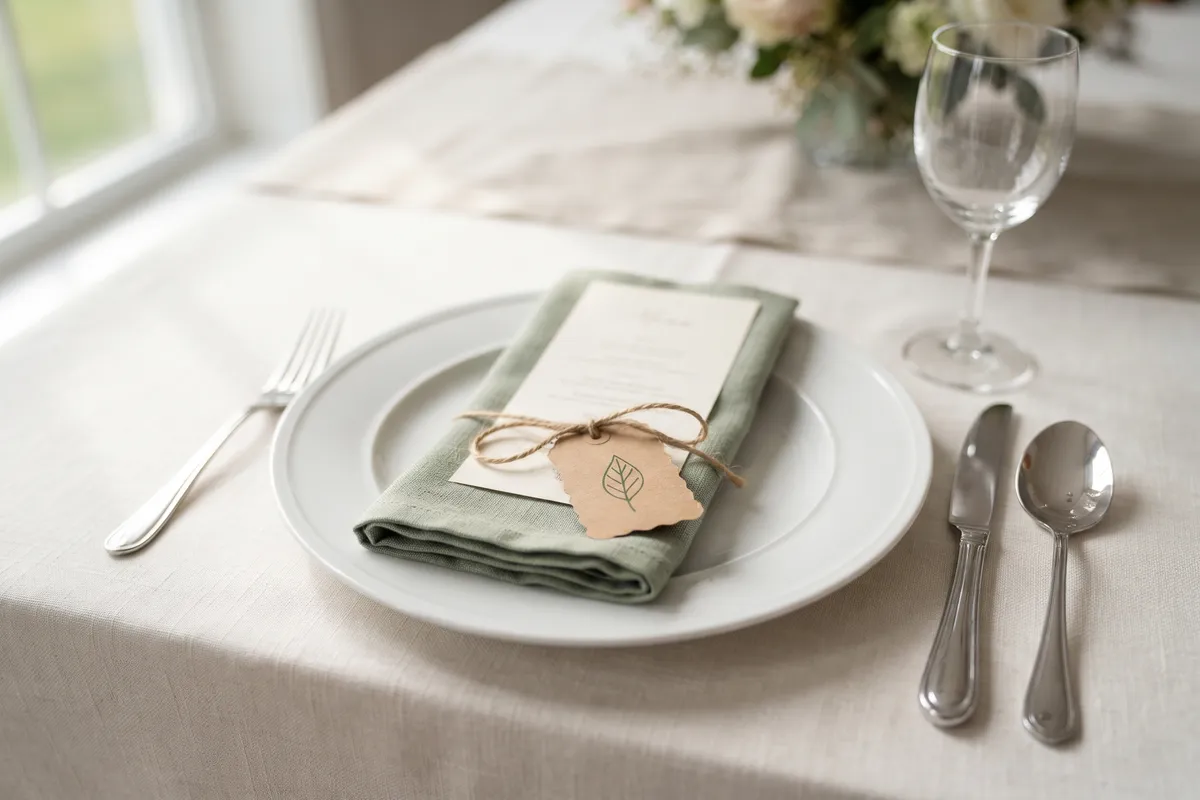
- A small marker at the seat: Many couples add a small icon for the entrée on the escort card or place card, or use personal menu cards. Either helps the servers without singling anyone out.
- Assigned seats for a plated dinner: With Tables and fixed seats, every guest gets a seat number. Then the servers know exactly where the gluten-free plate goes.
- No need to seat guests with similar diets together. Your seating order comes first; the list per table is enough for the servers.
- Count vendor meals: If your photographer, DJ or band eats too, include them in the caterer’s count.
- Pass on changes: If someone cancels or changes their choice, update the guest and send the new list.
Privacy: allergies are health information
Share allergy details only with the caterer and servers, never on the seating chart or place cards. The seat finder with QR code only shows names and tables, no meals or notes. With the link for venue & caterer (Event Pass), you decide whether the catering list is included; share it only if your guests are fine with that.
Handling allergens safely is the caterer’s job. Yours is a complete, up-to-date list.
FAQ
When does the caterer need the meal choices?
Usually with the final headcount, one to three weeks before the event. Ask your caterer early for their deadline.
What if guests don’t choose a meal?
Ask once more. If there’s still no answer, agree on a default dish with the caterer that suits most people, such as the vegetarian option.
Should allergies go on the place card?
No. The catering list, a seat number or a personal menu card is enough for the servers. The place card only shows the name and, if you like, the table.