Head table vs. sweetheart table: who sits where at a wedding
Updated:
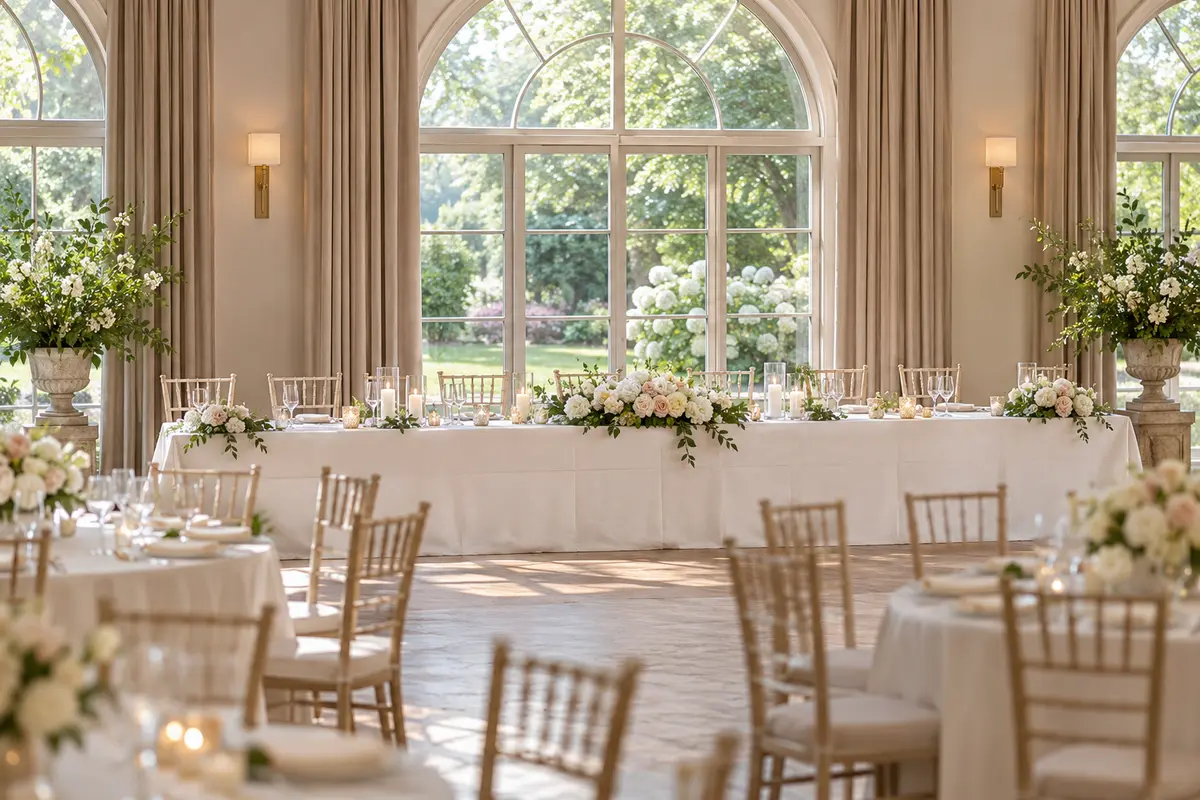
There are four usual options for the couple’s table: a long head table with the wedding party, a sweetheart table for just the two of you, a round table with family or close friends, or a spot in the middle of a long family-style table. Which one fits depends on your room and your families. What matters is that you feel comfortable, every guest can see you and the dance floor is close by.
The four usual options
| Option | Who sits there | Works well if … |
|---|---|---|
| Long head table | the couple and wedding party, sometimes with partners | the room has a clear front and there will be toasts |
| Sweetheart table | just the two of you | family situations are complicated or you want a clear view |
| Round table | you with family or close friends | the party is relaxed and all tables should feel equal |
| Middle of a long table | you among your guests | you are using long tables and want to be in the thick of it |
A long table that seats the wedding party together with their partners is often called a king’s table or estate table.
Pros and cons at a glance
- Head table: Everyone can see you, and toasts and photos work well. Because only one side is seated, nobody sits across from you; conversation only goes sideways.
- Sweetheart table: Quiet, great photos, and no seating questions about parents or the wedding party. On the other hand, it’s just the two of you, and your favorite people are spread across other tables. Many couples visit each table during dinner anyway.
- Round table: Sociable and easy. Part of the table sits with their backs to the room, and you stand out a little less.
- Middle of a long table: You’re right in the middle. During toasts some guests have to turn around, and photos get more crowded.
Who sits next to you
One traditional head table arrangement: the couple in the center, the bride to the groom’s right, the best man next to the bride and the maid of honor next to the groom, with bridesmaids and groomsmen alternating outward. How you sit is up to you. Many couples simply seat each attendant on the side of the person who asked them.
In the US, parents often host their own tables near the couple, together with grandparents and the officiant, instead of sitting at the head table. With divorced parents and new partners, that’s often the most relaxed solution: each parent gets their own, equally good table near you. More in the guide to wedding seating with divorced parents and blended families.
If the partners of your wedding party aren’t at the head table, seat them at the next table, facing you. Nobody enjoys a whole evening among strangers while their date sits up front; when in doubt, bring the partners to the head table.
Size and space
Allow about 2 feet of table per person, just like at the guest tables. For a head table seated on one side only, that works out to:
| People at the head table | Length roughly |
|---|---|
| 2 (sweetheart table) | 4 ft |
| 4 | 8 ft |
| 6 | 12 ft |
| 8 | 16 ft |
| 10 | 20 ft |
Leave about 2.5 feet behind the chairs to get up, and about 5 feet of open floor in front for servers, toasts and the photographer. The table calculator also works with 2 feet per person and 5 feet in front when you enter the seats at the head or sweetheart table. More rules of thumb are in the table spacing guide.
Where the table goes
- Facing the room: You should see all guests, and they you. A wall behind you feels calmer than a walkway.
- Close to the dance floor: Short distances for the first dance, the toasts and the cake cutting.
- Not right by the music: Next to the speakers, conversation is impossible.
- Avoid backlight: In front of large windows you show up as silhouettes in the afternoon, in photos too.
- A calm backdrop: Exit signs, service doors or stacked chairs behind you show up in every photo. Ask your venue what can be moved.
In the planner
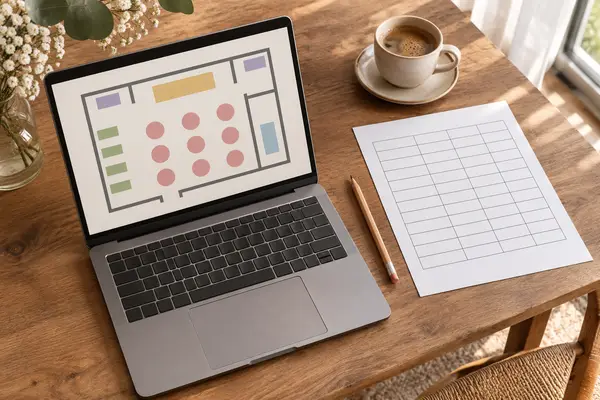
The Mixed wedding template already has a table for two in front of the dance floor, and the U-shape has a top table seated on the outside only. For your own head table, add a rectangular table and under Seats per side set seats on the room-facing side only. Give it a name such as “Head table” and it appears that way on the floor plan and, with the Event Pass, on the seating chart.
Start your seating with this table, then place parents and family nearby. The help article on the wedding seating arrangement explains the next steps. Not sure whether a head table or a sweetheart table looks better? Create a second variant and compare both layouts with the same guest list.
FAQ
Do parents sit at the head table?
Sometimes, but it isn’t required. In the US, parents more often host their own tables near the couple, which is also easier with divorced parents.
How long should a head table be?
About 2 feet per person on the seated side. For eight people that’s about 16 feet, for ten about 20 feet.
Is a sweetheart table rude to the wedding party?
No. Give your wedding party a table right next to you, together with their partners. They’re close by and still not on their own.