Divorced parents wedding seating: 3 approaches that work
Updated:
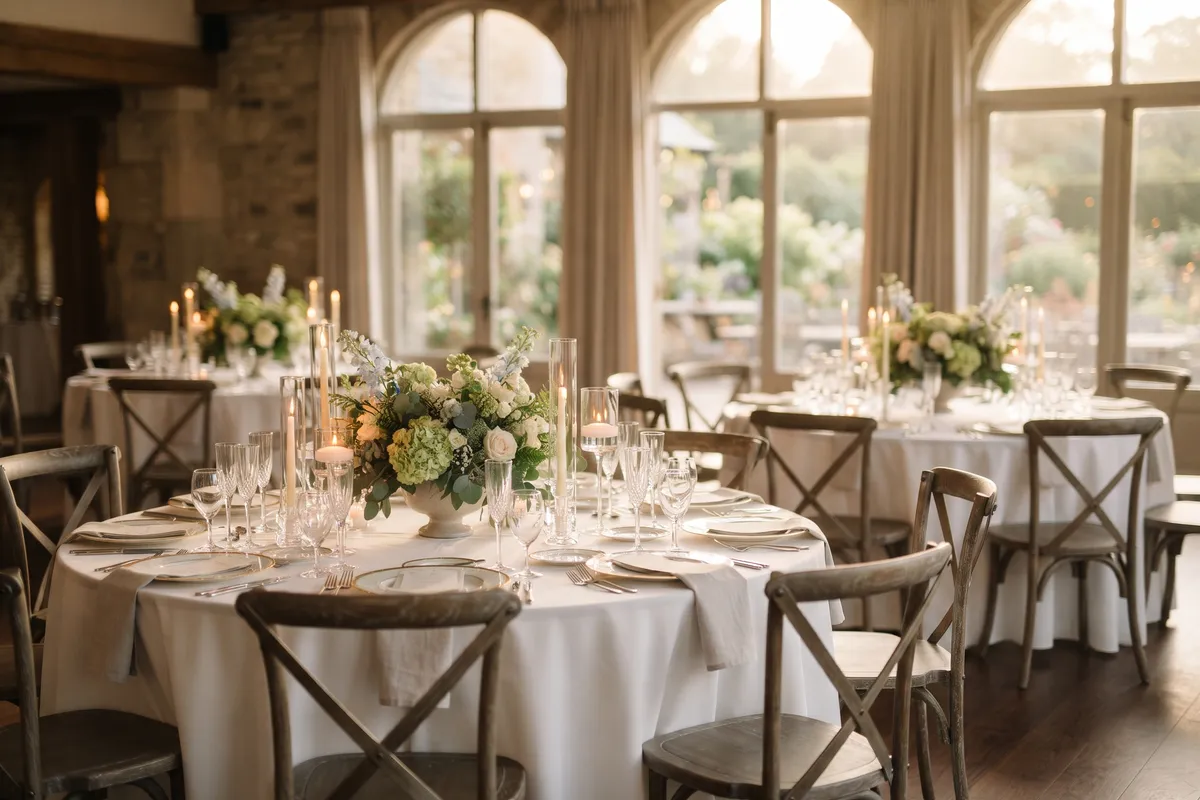
With divorced parents, one thing helps more than any rule: ask first instead of guessing at feelings. Three approaches have proven themselves: two parents’ tables at equal distance, a sweetheart table just for the two of you, or, if everyone is comfortable with it, one shared parents’ table. Which one fits depends less on etiquette than on how your parents get along today.
Few things make couples as nervous about seating as divorced parents. Who sits at the head table? Does the new spouse join the parents’ table? And what if two people haven’t spoken in years? There is no answer that fits everyone, but these principles help almost every time.
Talk first, plan second
Ask your parents before you plan, not after. Many divorced parents get along well and are happy to share a table. Others would rather keep their distance. A short, calm conversation with each parent separately clears up more than any etiquette book. These questions help:
- Would you like to share a table with your former spouse, or would you prefer separate tables?
- Is your partner or new spouse coming, and where should they sit?
- Is there anyone you’d really rather not sit next to?
- How do you picture the photos and the toasts?
Record the outcome in the planner as a seating wish: “sits at the same table as” or “does not sit at the same table as”. Suggest a seating plan avoids “apart” as long as other tables have free seats. If a wish isn’t met in the current plan, the list of seating wishes flags it, and so does the checklist under Review & print, so nothing slips through when you move guests later.
Three approaches that work
| Approach | Fits when | Watch for |
|---|---|---|
| Two parents’ tables, equally close | one or both parents want distance | same distance from you, set with the same care |
| Sweetheart table, or a head table with just your wedding party | any lineup at the head table would be tricky | all parents at their own tables in the front row |
| One shared parents’ table | everyone gets along, new partners included | former spouses not right next to each other; across the table or around the corner instead |
- Equally close, separate tables: each parent hosts their own table with their side of the family, both the same distance from you. Nobody looks less important.
- A sweetheart table: a table for two, or a head table with only your wedding party, sidesteps the question of who sits next to you. More in our guide to the head table and sweetheart table.
- One parents’ table: a round table has no head seat, so it often feels more relaxed than a long one.
At the ceremony
The same question comes up at the ceremony. A common tradition is that the parent who raised you, or your mother, sits in the first row and the other parent, with their spouse, in the second or third row. If your parents get along, both can sit in the first row, at opposite ends or on either side of the aisle. A “Reserved” sign with their names spares everyone uncertainty as they come in.
Stepparents, new partners and step-siblings
Someone who has been part of the family for years should be seated like it: with their partner, not at the coworkers’ table. A stepparent who helped raise you belongs with the parents, of course. Step-siblings of a similar age often get along better at a shared table than squeezed in between the adults.
Grandparents and relatives
Grandparents usually sit with “their” side. If they take sides, seat them with friendly relatives rather than between the camps. A wide aisle between two tables creates distance without looking deliberate. About 5 to 6 feet from table edge to table edge is common; a main aisle in between can be wider.
Compare two variants
If you’re unsure, create a second variant in the planner, such as “separate parents’ tables” and “one parents’ table”. Variants share the guest list but have their own tables and seating. Two variants are free. When you show your parents the plan, it’s usually best to show each their own seat and the tables around it, not every idea you discarded.
On the day
- A trusted point person: ask someone, such as your best man or maid of honor, to keep an eye on things and step in kindly if needed.
- Photos: schedule photos with both parents as a short, fixed block rather than leaving them to chance. Tell your photographer in advance who stands in which shot.
- Toasts: agree on the order of toasts beforehand, so nobody feels passed over.
If something changes at the last minute, it’s not a drama. In the planner, you move a guest with Choose table. If you use the seat finder (Event Pass), it updates on its own as long as the planner is open and online, and a QR code you already printed keeps working. A printed poster, on the other hand, doesn’t change; reprint it if a table changes. More in handling last-minute changes.
FAQ
Where does a parent’s new spouse sit?
With that parent, at the same table. If the relationship is new and still tense, the approach with two separate parents’ tables helps.
Do divorced parents have to sit at the same table?
No. Two tables at equal distance are just as respectful. What matters is that neither parent sits farther away or in a worse spot.
What if one parent feels slighted?
Calmly point out that both tables are equally close and equally set, and explain why you chose this. A clear place in the family photos often helps too.