Wedding seating chart etiquette: the rules that still matter
Updated:
Of the traditional seating etiquette, three rules have stood the test of time: hosts sit where they can see everyone, guests of honor sit close to them, and nobody sits alone among strangers. Strict rules such as alternating men and women or splitting up couples are optional today.
Traditional seating etiquette comes from a time when rank decided the evening. Much of it feels stiff now. A few principles have stayed, though, simply because they make guests comfortable. Everything here is convention, not law; what counts is what suits your celebration.
What still applies
- Hosts sit where they can see everyone. At a wedding that’s the head table or sweetheart table; at a birthday, the middle of the table.
- The seat of honor is next to the host. Traditionally, the seat to the right of the host is the place of honor. At a family party, that usually goes to a parent or the oldest guest.
- Guests of honor sit close. Parents, grandparents and the wedding party belong near the couple, with older guests on short paths.
- Nobody sits alone among strangers. Every guest knows at least one person at their table.
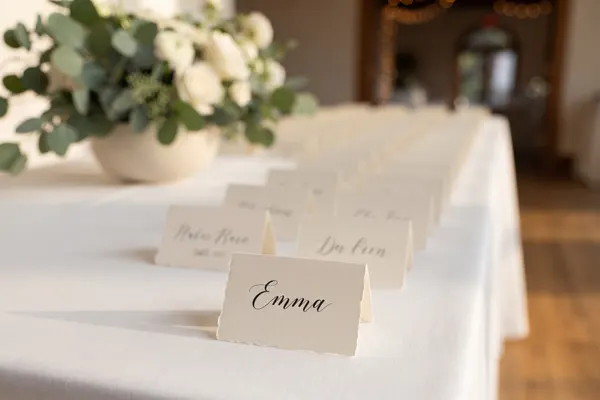
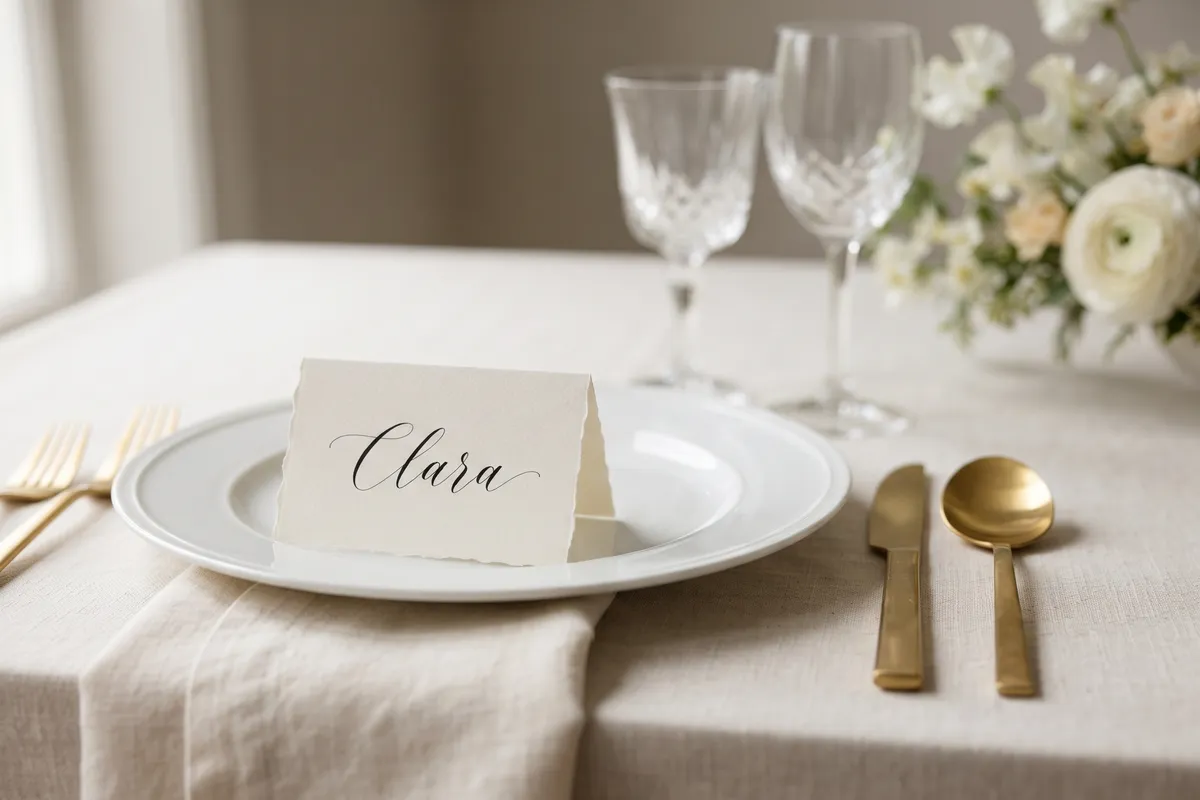
- Seats are clear in advance. Escort cards, place cards or a seating chart at the entrance spare everyone the awkward hunt with a drink in hand.
What you can relax about
| Classic rule | What’s usual today |
|---|---|
| Split up couples to keep conversation lively | couples sit together, especially when they know few other guests |
| Strictly alternate men and women | mix by conversation, not by gender |
| Seat by age or title | closeness by relationship to the hosts |
| All kids at one kids’ table | depending on age, with their parents or at a kids’ table within sight |
| A singles table | singles with people they know, not at a “singles table” |
The exception is a formal business dinner, where rank and protocol often still matter. For company events, see our company party seating guide.
The head table
The couple sits facing the room, with the bride traditionally to the groom’s right. Classically, the wedding party sits alongside them. A modern alternative is the sweetheart table for two, with all parents at their own tables in the front row. More in our guide to the head table and sweetheart table. If your parents are divorced, our guide to seating divorced parents has three proven approaches.
Officiant, rehearsal dinner and plus-ones
- The officiant: it’s customary to invite your officiant and their spouse to the reception. Seat them with family or close friends, not at a leftover table.
- The rehearsal dinner: traditionally hosted by the groom’s family, though today either family or the couple may host. The hosts sit where they can see everyone, with the couple close by.
- Plus-ones: a guest’s date or partner sits next to them. Splitting up a plus-one who knows nobody else is one of the few real etiquette mistakes.
Seats of honor at long and round tables
| Layout | Seat of honor | Watch for |
|---|---|---|
| Long banquet table | middle of the long side | end seats suit guests who get up often |
| U-shape | middle of the connecting table, facing into the U | seats on the inside only if servers still have room |
| Round tables | the table with a clear view of the stage or toasts | a round table has no head seat, which feels equal |
How round tables and banquet tables differ in planning is covered in round tables or banquet tables.
Escort cards, place cards and how to address them
Write the name the guest wants to be called. For a wedding that’s usually first and last name; add titles such as “Dr.” only for formal events. Couples can share one escort card, but at their seats each gets their own place card, and so do children. More in our guide to escort cards and place cards.
Who may change seats?
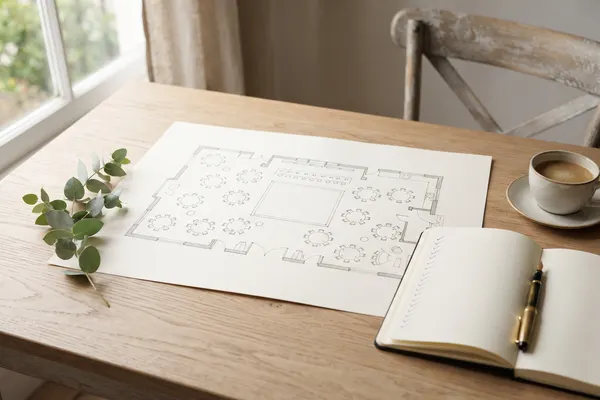
Nobody who hasn’t checked first. Swapped cards confuse the servers, especially with meal choices and allergies. A friendly line on the poster (“Please take the seat shown on the chart”) usually does the trick; there’s no need to make a big deal of it. After dinner, over dessert or on the dance floor, seats dissolve anyway, and that’s fine.
In short
- Hosts can see everyone; guests of honor sit close.
- Every guest knows at least one person at the table.
- Couples may sit together; alternating men and women isn’t required.
- Older guests get short paths.
- Seats are settled in advance and easy to find.
In the planner, you record who should sit together and who had better not with the seating wishes “sits at the same table as” and “does not sit at the same table as”. Suggest a seating plan takes these wishes and your groups into account and gives you a first draft to refine by hand. See RSVPs, seating wishes and a seating suggestion for how it works.
FAQ
Does the bride sit on the left or right of the groom?
Traditionally on the groom’s right, as seen from the couple’s seats. Today that’s a convention, not a must. What matters is that you both have a good view of the room.
Do couples sit together at a wedding?
Today, usually yes. Splitting up couples feels old-fashioned and is especially awkward for guests who hardly know anyone else.
Where do the parents of the couple sit?
Classically at the head table, beside the couple. With a sweetheart table, parents sit at their own tables in the front row, with their families and close friends.