Wedding table name ideas: themes, examples and tips
Updated:
Good table names are short, come from one shared theme and appear together with the table number. Popular themes are places that mean something to you, flowers, trees, islands or favorite songs. That makes the seating chart personal, keeps anyone from feeling stuck at “Table 12” in the back, and guests still find their seat quickly.
Ideas by theme
| Theme | Examples | Works well if … |
|---|---|---|
| Cities and trips | Lisbon, Vienna, Copenhagen, Florence | you love to travel or have lived in several places |
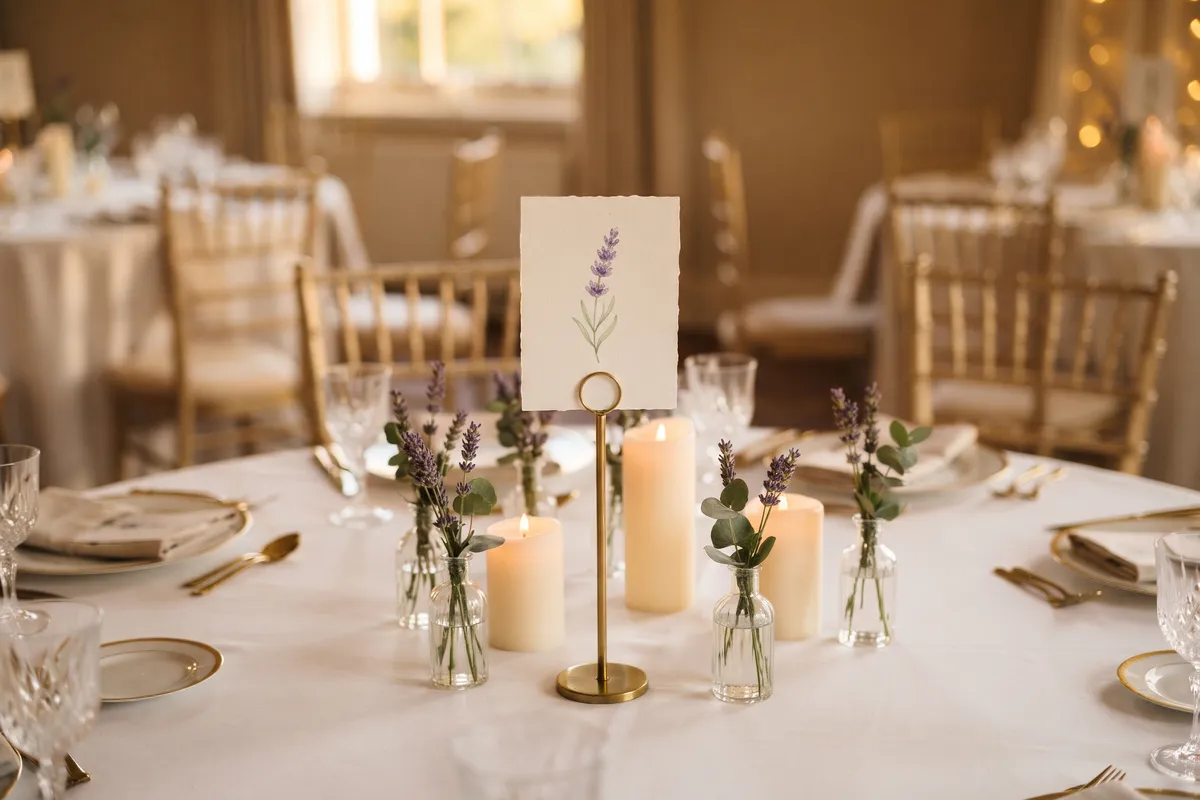
| Flowers | Lavender, Peony, Ranunculus, Dahlia | the names should match your flowers |
| Trees | Olive, Oak, Birch, Maple | you’re celebrating outdoors, in a garden or on a farm |
| Islands | Capri, Maui, Nantucket, Crete | your honeymoon or a favorite vacation is behind it |
| National parks | Yosemite, Acadia, Zion, Glacier | you hike or road-trip together |
| Music | Favorite songs, bands, albums | music connects you; your first-dance song suits your own table |
| Movies and books | Favorite films, characters, series | the theme stays easy to recognize for every guest |
| Your story | First Date, First Apartment, The Proposal | you want small photos or a line of text on each table |
For family parties, try favorite dishes, decades for milestone birthdays or chapters in the guest of honor’s life. There are more ideas for those events in the guide to birthday and family party seating charts.
What makes a good table name
- Short: One or two words. Long names get small and hard to read on table cards and the seating chart.
- Easy to say: Servers and the wedding party will say the names out loud. “Copenhagen” works; a tongue twister doesn’t.
- No ranking: Medals, “Grand Prize” or star ratings suggest some tables are better than others.
- No awkward surprises: Check that no name could be uncomfortable for a guest, such as the city where a breakup happened or a song with touchy lyrics. Rival sports teams are fun until someone ends up at the wrong one.
- Consistent: One theme for all tables looks calmer than a mix. The exception: many couples simply call their own table “Sweetheart” or “Head Table”.
A personal touch: name a table after a place connected to the guests sitting there, such as the city where you met those friends. Then a line about it on the table card is worth adding.
So everyone finds their table
A name alone doesn’t say where the table is. This combination works well:
- Name and number together: On the table card, the name large and the number small. Servers go by the number.
- A map on the chart (Event Pass): A small sketch of the room with table numbers shows the way. With the map turned on, named tables appear on the chart with number and name, such as “3 · Lavender”.
- Readable lettering: Script fonts look lovely but are hard to read from a distance. For table cards, bigger and simpler is better.
- Visible from standing height: Put table cards in a holder or frame, not flat between the glasses.
If you’re using escort cards instead of a chart, the table name goes on each card; the guide to escort cards vs. place cards explains the difference. How the chart and table cards work together is covered in the guide to the seating chart display.
In the planner
Select a table and enter the table name under Name. If you leave it empty, the table is called “Table” plus its number, such as “Table 4”. The planner assigns the number when you add the table and keeps it, even when you move tables. If you want the numbers to follow a path through the room, add the tables in that order.
Rather not type every name? Below the name field, “Table name ideas” offers four themes: cities, flowers, trees and islands. Under “Your own list” you paste your own names, one per line. The preview shows which table gets which name; names are assigned in table-number order. If your list is shorter than the number of tables, the remaining tables keep their current names. “Numbers only (remove names)” turns everything back into numbers, and Undo takes back any step.
The name shows up for free on the floor plan and the guest list by table. With the Event Pass it also appears on the seating chart and on table cards, optionally with the guest names on the back, and on table number signs with number and name. For a party without the Event Pass, there are printable table cards 1 to 12 to fill in by hand.
FAQ
Table names or table numbers: which is better?
Both together. The name makes the table personal; the number helps guests search and servers serve.
When should I choose table names?
Once the tables are in place. Then you know how many names you need and which table ends up where. If you change a name later, it’s updated everywhere at the next export.
Do guests need to know the table name in advance?
No. It’s enough that the seating chart or escort cards and the table card show the same name. If they all come from the same plan, they match automatically.